
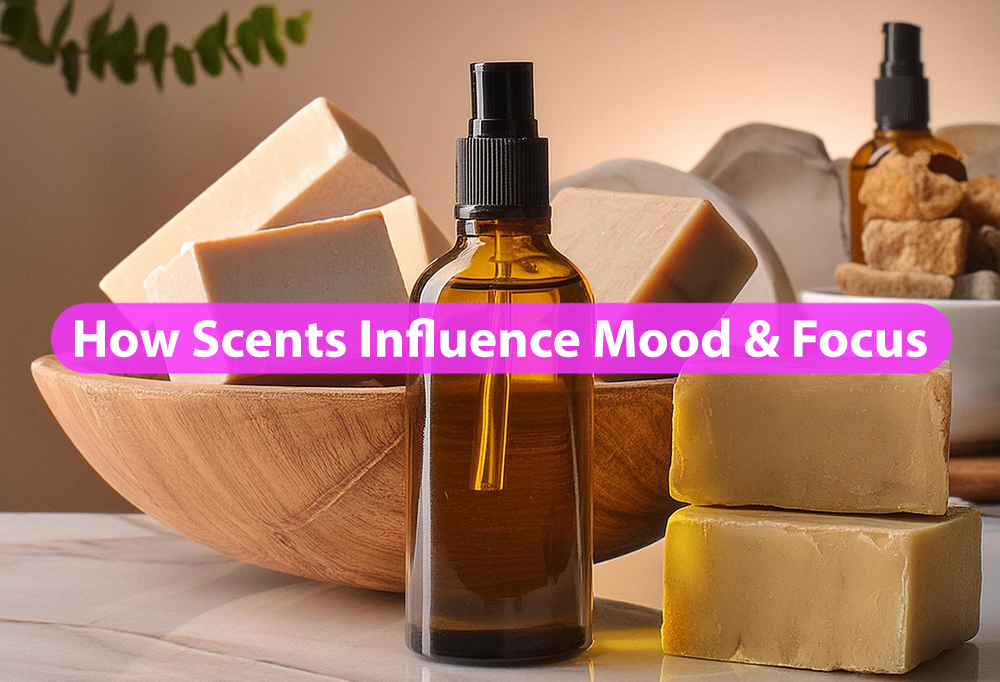
How Scents Influence Mood & Focus
Scent is one of the most powerful and often overlooked tools in wellbeing. Long before we consciously process smell, it triggers responses in the brain that influence mood, attention, memory, and emotional state.
In 2026, as interest grows in neuro wellness, sensory regulation, and sustainable mental performance, more people are exploring how natural aromas, particularly from plants, can shape the way they feel and function throughout the day.
This article explores how scents influence mood and focus, what the science tells us about smell and the brain, and how to use botanical aromas intentionally as part of daily life.
The Science of Smell: Why Scent Is So Powerful
Unlike sight or sound, smell has a direct pathway to the brain. When you inhale an aroma:
- Odour molecules travel through the nose to the olfactory receptors
- Signals are sent directly to the olfactory bulb
- The olfactory bulb connects to the limbic system which is the brain’s emotional and memory centre
This means scent can influence:
- Emotional responses
- Alertness and calm
- Memory recall
- Attention and focus
All before conscious thought takes place.
This direct connection explains why certain smells feel instantly soothing, energising, nostalgic, or grounding.
Scent, Mood & Emotional Regulation
Mood is closely linked to sensory input. In environments that are overstimulating or stressful, scent can act as a regulating cue, helping the nervous system recalibrate.
Plant-based aromas contain volatile compounds (such as terpenes and esters) that interact with the olfactory system and influence how the brain perceives safety, stimulation, or rest.
While essential oils are not medicines, many have been studied for their psychological and sensory effects, which explains their long-standing use in cultural, ritual, and wellness contexts.
Scents Commonly Associated with Calm
Certain botanical aromas are widely used in practices that aim to slow the pace and create emotional balance.
Lavender
Often associated with relaxation and evening rituals, lavender’s soft floral aroma is commonly used in environments intended for rest or reflection.
Frankincense
Historically used in ceremonial and meditative settings, frankincense is valued for its grounding, resinous scent that encourages stillness and presence.
Cedarwood
With its earthy, woody profile, cedarwood is frequently used to create a sense of stability and emotional grounding.
These aromas are often chosen during:
- Evening wind-down routines
- Meditation or journalling
- Low-stimulus environments
Scents & Focus: Aromas That Support Mental Clarity
Just as some scents encourage calm, others are commonly used to enhance alertness and concentration.
Peppermint
Peppermint’s sharp, fresh aroma is often associated with mental clarity and sensory stimulation. Studies suggest it may help increase perceived alertness and attention.
Rosemary
Rosemary has been widely researched for its relationship with cognitive performance. Its aromatic compounds are often used in work or study environments.
Citrus (Lemon, Bergamot)
Bright citrus scents are associated with uplifted mood and mental freshness, making them popular for daytime use.
These scents are commonly used:
- During work or creative tasks
- In morning routines
- When mental fatigue sets in
Memory, Scent & Learning
Scent is uniquely tied to memory. The limbic system links smell with stored emotional experiences, which is why a familiar aroma can instantly recall a moment, place, or feeling.
This has interesting implications for:
- Study routines
- Habit formation
- Emotional anchors
Using the same scent consistently during a specific activity (such as reading, meditation, or focused work) can help the brain associate that aroma with the desired mental state.
Over time, the scent becomes a cue, signalling the brain to shift into focus or calm more easily.
How to Use Scent Intentionally at Home
1. Create “Scent Zones”
Assign different aromas to different activities:
- One scent for work or study
- One for relaxation
- One for morning routines
This helps the brain differentiate spaces and states.
2. Keep It Simple
You don’t need complex blends. Often one carefully chosen oil is more effective than many layered scents.
3. Use Consistency Over Intensity
Gentle, regular exposure is more effective than strong, overpowering aromas.
4. Pair Scent with Ritual
Scent works best when combined with:
- Tea rituals
- Journalling
- Breathwork
- Screen-free pauses
Scent & Modern Wellness Trends
In 2026, scent is increasingly seen as part of sensory wellness, alongside sound, light, and texture. This approach recognises that wellbeing isn’t just about what we consume, but what we experience.
Aromatherapy fits naturally into:
- Neuro wellness routines
- Morning and evening rituals
- Slow living and analog wellness
- Home sanctuary design
The goal isn’t stimulation or sedation, it’s balance.
Choosing Quality Botanical Aromas
Because scent has such a direct relationship with the brain, quality matters. Pure, well-sourced botanical oils offer a more authentic sensory experience than synthetic fragrances.
When choosing aromatic products, look for:
- Botanical origin and name
- Minimal processing, and processing method
- Natural aroma profiles (not overpowering), avoid synthetics
Bringing Scent Into Everyday Life
You don’t need to overhaul your lifestyle to benefit from aromatic rituals.
Start with:
- One scent you genuinely enjoy
- One consistent moment in your day
- One simple ritual
Over time, scent becomes part of your rhythm to quietly support mood, focus, and emotional balance.
Sensory Wellness at My Herb Clinic
At My Herb Clinic, we believe wellness is deeply sensory. Alongside herbal teas, botanicals, and mushroom powders, scent plays an important role in how we experience calm, clarity, and connection.
Our collection of pure essential oils, absolutes, and attars are curated to support everyday rituals, from morning focus to evening stillness.
Explore our range and discover how scent can gently shape the way you feel, think, and move through the day.
Recent Posts
-

Diffusing the Spirit of Easter: Uplifting Autumn Aromas & Herbal Rituals for Southern Homes
For much of the world, Easter arrives wrapped in blossoms, sunshine, and the scent of fresh spring a …3rd Mar 2026 -

Anti-Inflammatory Herbs You Can Add to Your Tea
Inflammation is a natural and essential part of the body’s defence system. In the short term, it hel …17th Feb 2026 -
How Scents Influence Mood & Focus
Scent is one of the most powerful and often overlooked tools in wellbeing. Long before we consciousl …21st Jan 2026